
What Can You Actually Eat on a Low Histamine Diet?
Yes, there is plenty you can eat. The three things that make a food high histamine, and how to build meals around them without living on six foods.
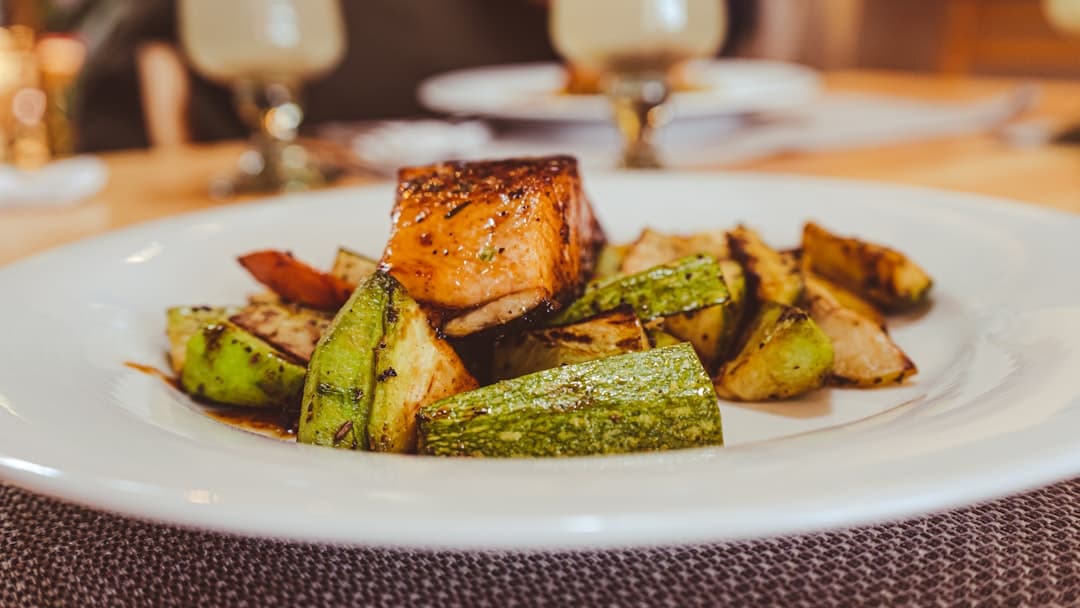
Photo: Emmanuel Olguín / Unsplash
Mostly fresh food, cooked the same day you plan to eat it. Fresh meat, fresh or frozen vegetables, most fruit, rice, oats, eggs, and olive oil are usually fine. That is a wider list than this diet's reputation suggests. The reason it looks so narrow is that nearly all low histamine advice gets written as a list of things to remove, which means the foods you can still eat never actually get named anywhere.
Someone left a comment on one of my videos recently saying it would be shorter to just tell people what they can eat. She had a point.
What actually makes a food high in histamine
Very few foods are naturally high in histamine to begin with. Histamine forms in food through bacterial activity, which means most of it arrives after the food was harvested or butchered. How a food was produced, and how long it has been sitting since, decides far more than what the food is.
There are three separate ways a food ends up on a low histamine list, and they are not the same mechanism.
-
Bacterial activity. This is the big one. Anything fermented belongs here: sauerkraut, kimchi, miso, soy sauce, yogurt, and kefir. So do aged cheeses, cured and processed meats, and anything canned or built to sit shelf-stable for months. When a Barcelona research group compared ten published low histamine diets in 2021, fermented foods were the only category that every single one of those diets excluded.
-
DAO inhibitors. DAO is diamine oxidase, the enzyme your gut lining makes to break down the histamine you eat. If something blocks it, the histamine you take in has nowhere to go. Alcohol, caffeine, and chocolate are the usual names. The same review offered another explanation for why citrus fruits and bananas keep turning up on these lists, which is putrescine, a different amine that can interfere with DAO clearing histamine in the intestine.
-
Histamine liberators. Mast cells are immune cells that store histamine and release it when something triggers them. Some foods are thought to prompt that release directly, which is a different thing from the food containing histamine itself. Strawberries, tomatoes, citrus, and tropical fruit like pineapple and mango are the usual names here. This category is the least settled of the three, and the authors said as much: a number of commonly excluded foods have little or no biogenic amine content, and the mechanism behind the liberator label hasn't been established.
The list you were handed is probably longer than the chemistry requires
That 2021 comparison is the most useful thing I have read on this question. Across the ten diets, the excluded foods were mostly different from one another. About 32 percent of those exclusions could be explained by the food's own histamine content, so roughly two in three could not.
Which means that if you have cut down to six safe foods and you are still reacting, over-restriction is likely part of it. The food you took out last week may never have been the problem.
What to build meals from
Fresh meat and poultry, cooked the same day you buy or thaw it. Most vegetables, and most plain grains, including rice, oats, and quinoa. Eggs, olive oil and coconut oil, and fresh herbs. Fruit that is not overripe, with apples, pears, and blueberries being the easiest places to start.
Frozen is often the safer choice rather than the compromise. Frozen vegetables went into the freezer close to harvest, and freezing halts the bacterial activity that makes histamine in the first place. Meat in the refrigerated case has a history you can't see. It can be completely fine from a food safety standpoint and still carry enough histamine to set off someone reactive. Fish is its own case, since histamine climbs quickly in fish after catch, so frozen at sea and cooked from frozen is the more predictable route.
Ripeness counts too. A very ripe avocado or tomato has had time to ferment a little on its own, which puts it somewhere different from the same fruit three days earlier. For vinegar, distilled white is the lower histamine option, whereas wine, balsamic, and fruit vinegars run higher.
The leftovers problem
Someone cooks a meal, eats it, and feels fine. The next day they eat the identical food out of the fridge and react, and they can't work out what changed. Nothing changed about the recipe. The food spent a night in the refrigerator, and bacterial activity kept going the whole time. It is still completely safe to eat. There is more histamine in it than there was the day before, which for someone sensitive is enough.
If you only change one thing, make it storage. Cooking fresh and freezing leftovers straight away costs you no foods at all, and for a lot of people it does more than any removal does. Should you want a second step, the aged and fermented group is the highest yield, seeing as that is the one category every published diet excludes.
Why this is a starting point and not a permanent way of eating
Total load is the whole idea here, rather than any one food. The mast cell bucket model is where I usually start people, and the same mechanism runs across MCAS more broadly. Mast cell activation syndrome, or MCAS, is a condition in which mast cells release their contents too readily. Food is one input filling the bucket, and lowering it for a while buys enough room to see what else is in there.
There is also no blood test that settles this. A 2025 review stated it plainly: histamine intolerance has no validated biomarker, and the diagnosis rests mainly on clinical assessment plus how someone responds to a low histamine diet and to reintroduction afterward. Hrubisko and colleagues, reviewing the field in 2021, called the diet itself the gold standard, where a good response is what confirms the picture. This is why the eating plan works as a diagnostic instrument rather than a verdict.
A good response still doesn't prove histamine was the mechanism. Researchers at a Munich dermatology and allergy department tested that directly. They gave 59 people who suspected histamine intolerance a single-blind, placebo-controlled histamine challenge, and in roughly 85 percent the diagnosis was ruled out, while close to two thirds had symptoms after a placebo. Food reactions are real. Their cause is less settled than the internet makes it sound.
Prolonged restriction carries a nutritional cost, which is why this belongs with a practitioner you trust rather than running indefinitely on your own. I wrote separately about how long you actually stay on a low histamine diet, and about what a low DAO result does and doesn't tell you.
If you're living with MCAS and want a structured starting point, MCAS: What You Need to Know First walks through what the diagnosis actually means, where to begin, and what to do when diet alone isn't enough.
FAQ
Are eggs low histamine?
Fresh eggs are generally well tolerated and appear on most low histamine food lists as an allowed protein. Cook them fresh rather than eating them from a batch made a few days earlier, since the storage rule applies to eggs the same way it applies to everything else. Raw egg white is the exception some lists treat separately, as it has been described as a histamine liberator.
Can you drink coffee on a low histamine diet?
Coffee is usually restricted, though not because it contains much histamine. Caffeine is grouped with the substances thought to inhibit diamine oxidase, the enzyme that breaks histamine down in the gut lining. The concern is that it reduces your clearance rather than adding to your intake. Whether that matters for you depends on which of the three mechanisms is driving your symptoms.
What foods are highest in histamine?
Fermented foods top every list, and they are the only category that appeared in all ten published low histamine diets compared in a 2021 Nutrients review. That includes sauerkraut, kimchi, miso, soy sauce, yogurt, and kefir. Aged cheeses, cured and processed meats, and fish that was not frozen promptly after catch come next. Anything built to sit shelf-stable for months belongs in the same group.
Are leftovers really a problem, or is that overcautious?
For most people leftovers are fine. For someone who is histamine-reactive they are one of the most common triggers people miss, because bacterial activity continues in the refrigerator and histamine keeps accumulating overnight. The food stays perfectly safe by food-safety standards. It simply contains more histamine than it did when it was cooked, which is why the same meal can be tolerated on day one and cause a reaction on day two.
Can you eat fruit on a low histamine diet?
Yes, and more of it than most lists suggest. Apples, pears, and blueberries are common starting points. The fruits that get restricted are mostly citrus, strawberries, and tropical fruit like pineapple, banana, and mango, which are grouped as histamine liberators rather than as high-histamine foods. Ripeness is the other variable, since very ripe fruit has had time to ferment slightly on its own.
Is frozen food better than fresh for a low histamine diet?
Often, yes. Frozen vegetables were frozen close to harvest, and frozen meat has a known history in a way that meat from the refrigerated case does not. Freezing halts the bacterial activity that produces histamine. This is the reason frozen is a deliberate choice here rather than a compromise, which surprises people who assume fresh always means lower histamine.
References
- 1.
- 2.
- 3.
- 4.
- 5.